
The Project
This initiative aims to enrich understanding of these sculptures by analyzing their typologies, symbolic meanings, roles in ancient societies, and their later reinterpretations in antiquarian contexts.
By using cutting-edge methodologies and interdisciplinary collaboration, the project seeks to bridge knowledge gaps and foster gender inclusivity in cultural narratives.


Using a multidisciplinary approach, the research combines art historical analysis, archaeometric studies, and archival work to uncover how these sculptures functioned in domestic, funerary, and public spaces. It also examines their reinterpretation during the Renaissance and 19th century, particularly in antiquarian collections. Digital humanities tools, such as 3D scanning and reconstruction, allow for detailed study and visualization of the sculptures and their contexts.
The project shares its findings widely through digital reconstructions, exhibitions, and educational programs, making the research accessible to academic and public audiences. By offering a deeper understanding of these portraits and their cultural significance, ANTIQUAE FEMINAE not only advances knowledge of classical art but also contributes to greater gender inclusivity in the study and presentation of cultural heritage.
The Team
Research and Working Team

Principal Investigator, UAB - ICAC, expert in classical sculpture and archaeological studies
Montserrat Claveria

Restorer and Archaeologist, MAC, specializing in sculpture conservation and historical restoration
Isabel Moreno

Archaeologist, Museum of Badalona, specializing in the study and preservation of ancient sculptures
Esther Gurri

Filologist, expert in classical texts
Antònia Soler

Archaeologist, University of Rome - Tor Vergata, specializing in classical art and archaeology
Beatrice Cacciotti

Archaeologist, Trier University, with expertise in classical sculpture and material culture
Markus Trunk
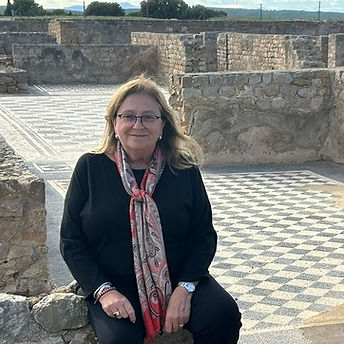
Archaeologist and Director, Empúries Site, MAC, focusing on archaeological excavations and site management
Marta Santos

Conservator and Archaeologist, Empúries Site, MAC, expert in the conservation of archaeological materials
Elisa Hernández

Curator, Kunsthistorisches Museum, Vienna, specializing in ancient portraiture and sculpture
Manuela Laubenberger

Archaeologist, Museum of Reus, with expertise in classical art and ancient history
Jaume Massó

Supporting researcher. UAB - ICAC, specializing in classical art history and sculpture analysis
Saray Garcia

Supporting researcher. Art Historian, specializing in classical art and its reception in modern times
Manuela Domínguez

Specialist Research Support Technician. Art Historian UAB
Clara Irene Toledano